Wednesday, 20 November 2024

ASSIGNMENT:- 201 "Lakshman's Inner Conflict: Duty and Compassion in Toru Dutt's Poem 'Lakshman'"

ASSIGNMENT:201


201: "Lakshman's Inner Conflict: Duty and Compassion in Toru Dutt's Poem 'Lakshman'"


# Personal Information:-


Name:- Hardi Vhora

Batch:- M.A. SEM:3 (2023-2025)

Paper Name:- Indian English Literature – Pre-Independence

Paper No.:- 201

Paper Code:- 22406

Roll No.:- 08

e-mail:- hardivhora751@gmail.com


# Table of Content:-


  • Abstract

  • Keywords

  • Introduction

  • Lakshman’s Sense of Duty

  • Compassion and Emotional Conflict

  • Psychological Dilemma and Character Complexity

  • Conclusion

  • References


 # Abstract:-

Toru Dutt’s poem Lakshman vividly portrays the psychological turmoil of Lakshman, a pivotal character in Indian mythology, as he grapples with the dual obligations of duty and compassion. The poem delves into his inner conflict when Sita, desperate and distraught, implores him to abandon his assigned duty and come to her aid. 


Lakshman’s unwavering commitment to protecting her and respecting Rama’s instructions clashes with his empathetic response to Sita’s pleas, highlighting his moral and emotional dilemma. This paper explores how Dutt humanizes Lakshman by emphasizing his vulnerability and ethical struggles, transforming him from a mythological hero into a multidimensional character with universal resonance. The analysis underscores the poem’s rich thematic depth and its reflection on duty, morality, and the complexities of human relationships.


 # Keywords:-

Toru Dutt, Lakshman, duty, compassion, psychological conflict, ethical dilemma, humanized mythology, Indian epics, moral ambiguity, human relationships.


# Introduction:-


Toru Dutt or Tarulatha Dutt was an Indian poet born in the Bengal province in 1856 to the well-known Rambagan Dutt family. As the youngest child of Govin Chandra Dutt and Kshetramoni Mitter, Toru belonged to a family of writers. Her father Govind Chunder Dutt, who was an employee of the Government of India, was a linguist and also published some poems. Her mother, Kshetramoni Mitter, was a woman who loved Hindu mythology and translated the book The Blood of Christ into Bengali. Because of her father’s governmental employment, the family travelled frequently.
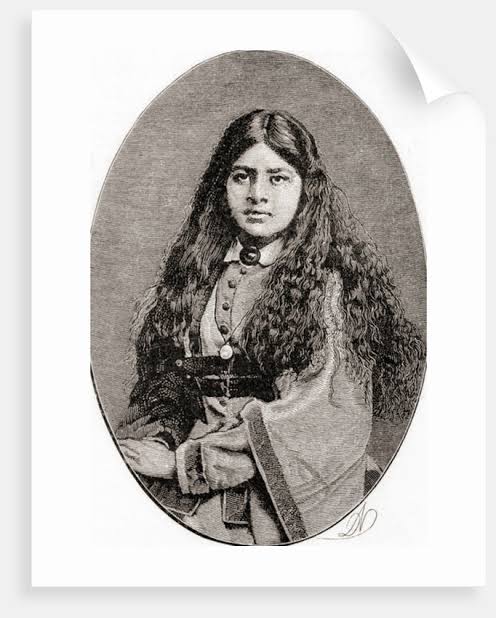


Toru Dutt, a pioneering Indian poet, embraced Christianity at the age of six, an event that deeply influenced her life and work, even as Hindu beliefs continued to resonate in her writings. After facing societal rejection due to their conversion, her family moved to Mumbai and later to France, where Toru mastered French and developed a lifelong admiration for writers like Victor Hugo. Her multicultural experiences, including education at Cambridge, shaped her poetic sensibility, blending Indian mythology with European forms. Toru began publishing at 18, producing novels and poetry that reflected her hybrid identity, such as A Sheaf Gleaned in French Fields and the posthumous Ancient Ballads and Legends of Hindustan.

Despite her untimely death from consumption at 21, her work remains celebrated for its emotional depth and synthesis of Indian and Western traditions, exemplified in poems like "Lakshman," "Our Casuarina Tree," and "The Lotus." Her legacy as a cosmopolitan and multicultural figure endures through critical studies and Harihar Das’s biography, Life and Letters of Toru Dutt.


> Introduction of the poem ‘Lakshman':-



Toru Dutt’s Lakshman stands as a remarkable fusion of Indian mythology and Victorian poetic sensibility, offering a fresh and nuanced perspective on the epic narrative of the Ramayana. Through the character of Lakshman, the poem explores the timeless conflict between duty and compassion, a theme that resonates deeply across cultures and epochs. Tasked with protecting Sita and adhering to his brother Rama’s instructions, Lakshman finds himself torn when Sita, in her anguish, pleads for his help. His steadfast commitment to duty, symbolized by the Lakshman Rekha, clashes with his empathetic response to her emotional distress, revealing his inner turmoil. Toru Dutt’s portrayal of Lakshman moves beyond the archetypal hero, presenting him as a profoundly -


human figure grappling with ethical and emotional complexities. This paper examines how Dutt’s poetic narrative sheds light on Lakshman’s psychological struggles, offering readers a relatable and introspective lens to view his character.


# Lakshman’s Sense of Duty:-


In Toru Dutt's poem Lakshman, the character of Lakshman epitomizes an unwavering sense of duty, reflecting his steadfast loyalty to Lord Rama and adherence to his responsibilities as a protector.

Lakshman’s duty is symbolized by the Lakshman Rekha, a boundary he draws to safeguard Sita from harm while he is away. This act underscores his commitment to fulfilling Rama’s command and his role in preserving Sita’s safety.


When Sita pleads with Lakshman to rescue Rama, whom she believes to be in danger, his conflict becomes evident. Despite her emotional appeals and accusations of indifference, Lakshman remains resolute, prioritizing his duty over personal emotions or fear of Sita's anger. His sense of duty is rooted in his belief in Rama’s invincibility and his obligation to maintain the trust placed in him. Toru Dutt uses Lakshman’s steadfastness to explore the complexities of moral obligations, highlighting how adhering to duty often involves suppressing personal desires and emotions.

Ultimately, Lakshman’s sense of duty not only defines his character but also serves as a commentary on the ethical dilemmas faced when duty and compassion collide, making him a profound and relatable figure in the poem.


# Compassion and Emotional Conflict:-

In Toru Dutt's Lakshman, the theme of compassion and emotional conflict is intricately woven into Lakshman’s character, highlighting his human vulnerability amidst his unwavering sense of duty. Sita’s desperate pleas for him to abandon his post and rescue Rama put Lakshman in a moral dilemma, as he must balance his loyalty to his brother with his empathy for Sita’s distress.

Lakshman’s compassion is evident in his internal struggle; he does not dismiss Sita's fears lightly but is pained by her accusations of indifference and ulterior motives. Her harsh words wound him, yet he remains composed, reflecting the depth of his respect and care for her.

His emotional conflict arises from his recognition of Sita’s vulnerability and his innate desire to console and protect her, clashing with his resolute adherence to duty.


Toru Dutt uses vivid imagery and heartfelt dialogue to depict Lakshman’s inner turmoil, presenting him as a deeply human figure torn between his sense of responsibility and his compassionate instincts. This conflict underscores the universal tension between moral obligations and emotional bonds, making Lakshman’s struggle a timeless and relatable aspect of the poem.


# Psychological Dilemma and Character Complexity:-

In Toru Dutt's poem Lakshman, the psychological dilemma faced by Lakshman is central to his character, highlighting the emotional and moral complexities of his role in the epic narrative. This internal conflict not only deepens his character but also humanizes him, making him more relatable and multidimensional.

> Lakshman’s Role and Responsibility:-

Lakshman’s duty as a protector is clear: he must guard Sita in Rama’s absence. This responsibility is symbolized by the Lakshman Rekha, a boundary drawn to ensure Sita’s safety. However, this seemingly straightforward duty becomes the source of his psychological struggle when Sita, believing Rama to be in mortal danger, urges him to leave his post. Lakshman’s predicament lies in the collision of his unwavering loyalty to Rama and his empathy for Sita’s fear and anguish.

> Sita’s Accusations and Emotional Impact:-

Sita’s accusations of indifference and ulterior motives intensify Lakshman’s psychological turmoil. Her harsh words question his integrity, suggesting that he harbors selfish intentions in not immediately rushing to Rama’s aid. These accusations deeply hurt Lakshman, who respects and reveres Sita as a mother figure. 


This emotional conflict between his sense of honor and the unjust blame he receives adds layers of complexity to his character.

 >Moral and Ethical Dilemma:-

Lakshman’s dilemma is not just emotional but also ethical. He must decide whether to follow Sita’s urgent pleas or adhere to Rama’s explicit command. While his duty demands obedience to Rama, his compassion for Sita’s evident distress pulls him in the opposite direction. This conflict exposes the burden of responsibility placed on Lakshman, as every decision he makes has profound consequences.

> Character Complexity:-

Through this psychological struggle, Lakshman emerges as a richly complex character. He is neither a one-dimensional, duty-bound warrior nor an indifferent bystander. Instead, he is a figure caught in the intricate web of human emotions and moral obligations. His restraint in the face of Sita’s anger and his resolve to honor his duties reflect his maturity, yet his silent suffering reveals his vulnerability. Toru Dutt’s portrayal of this conflict makes Lakshman a figure of both strength and sensitivity.

> Universal Resonance of Lakshman’s Struggle:-

The psychological dilemma faced by Lakshman resonates universally, as it mirrors the struggles individuals often face when caught between competing moral and emotional obligations. Dutt’s nuanced depiction of Lakshman reflects the broader human condition, where decisions are rarely black and white, and duty often demands sacrifices.

In Lakshman, Toru Dutt skillfully transforms a mythological hero into a symbol of the eternal human conflict between heart and mind, duty and compassion. His psychological depth enriches the narrative, offering profound insights into the emotional and ethical complexities of his character.


# Conclusion:-

In conclusion, Toru Dutt’s portrayal of Lakshman in the poem Lakshman offers a profound exploration of psychological complexity and moral conflict. Lakshman’s unwavering loyalty to Rama, juxtaposed with his compassion for Sita, reveals the intricate balance between duty and emotional sensitivity. His internal struggle, marked by ethical dilemmas and emotional vulnerability, transforms him from a mythological figure into a relatable human character. Through Lakshman, Dutt delves into the universal tension between moral obligations and personal emotions, showcasing the enduring relevance of these themes. Ultimately, Lakshman’s character serves as a timeless reflection of the challenges inherent in navigating the intersections of duty, compassion, and human fallibility.


# References:-


Note:- I have taken the help of generative AI (ChatGpt) to explore my assignment.


(Due to not being able to find authentic articles on the poem)


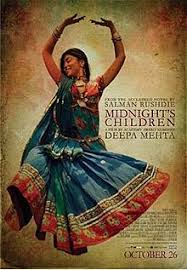
ASSIGNMENT:- 202 "Hybridity and Linguistic Innovation in Salman Rushdie's Midnight's Children"

 ASSIGNMENT:202


202: "Hybridity and Linguistic Innovation in Salman Rushdie's Midnight's Children"


# Personal Information:-


Name:- Hardi Vhora

Batch:- M.A. SEM:3 (2023-2025)

Paper Name:- Indian English Literature – Post-Independence

Paper No.:- 202

Paper Code:- 22407

Roll No.:- 08

e-mail:- hardivhora751@gmail.com


# Table of Content:-


  • Abstract

  • Keywords

  • Introduction

  • Rushdie's Linguistic Style

  • Hybridity and Identity

  • Impact on Postcolonial Literature

  • Conclusion

  • References


# Abstract:-


Salman Rushdie’s Midnight’s Children is a groundbreaking work that redefines the use of English in postcolonial literature through its innovative linguistic hybridity. This paper explores how Rushdie’s fusion of English with Indian vernacular languages, idioms, and cultural references creates a unique narrative style often referred to as "chutnified" English. By blending multiple linguistic and cultural elements, the novel reflects the complex, fragmented identities of its characters and the historical hybridity of postcolonial India. The study highlights how Midnight’s Children challenges traditional norms of English literature, pioneering a linguistic model that celebrates multiculturalism and resists colonial homogenization. Rushdie’s work emerges as a significant contribution to postcolonial discourse, influencing future writers to embrace hybridized forms of expression in literature.


# Keywords

  • Salman Rushdie, 

  • Midnight’s Children Linguistic hybridity

  • Postcolonial literature

  • Chutnified English

  • Cultural identity 

  • Hybridity in language, 

  • Multiculturalism.


# Introduction:-

Salman Rushdie (born June 19, 1947, Bombay [now Mumbai], India) is an Indian-born British-American writer whose allegorical novels examine historical and philosophical issues by means of surreal characters, brooding humor, and an effusive and melodramatic prose style. Because of his treatment of sensitive religious and political subjects, particularly in his novel The Satanic Verses (1988), Rushdie has been the target of death threats and violent attacks and a central figure in debates about free speech and censorship.

Salman Rushdie’s Midnight’s Children (1981) is often hailed as a seminal work in postcolonial literature, not only for its narrative complexity but also for its revolutionary use of language. 


The novel, which chronicles the tumultuous history of post-independence India through the life of its protagonist, Saleem Sinai, is written in a distinctive, hybridized form of English that blends elements of Indian vernacular languages, cultural idioms, and historical references. This linguistic innovation has become one of Rushdie’s signature features, and it plays a crucial role in reflecting the novel's themes of fragmentation, identity, and cultural synthesis.

The concept of linguistic hybridity is central to understanding Rushdie's approach to postcolonial identity. By incorporating words, phrases, and sentence structures from Hindi, Urdu, and various regional dialects, Rushdie’s Midnight’s Children disrupts the dominance of English as the language of imperial power and reclaims it as a tool for expression in a newly independent, multicultural world. This "chutnified" English, as it is often referred to, challenges the notion of a single, standardized English and instead celebrates the dynamic, fluid nature of language in a postcolonial context.


This critical note examines how Midnight’s Children serves as a platform for linguistic hybridity, reflecting not only the multicultural fabric of India but also the fractured identities of its characters. In doing so, it argues that Rushdie’s inventive use of language not only reshapes the contours of English literature but also articulates a vision of postcolonial identity that is deeply entwined with historical and cultural complexity.Through this lens, Rushdie’s linguistic hybridization in Midnight’s Children emerges as both a narrative strategy and a political act, contributing to the broader conversation on the role of language in postcolonial expression.


# Rushdie’s Linguistic Style:-


Salman Rushdie’s Midnight’s Children has been variously described as a postmodern novel, Post-colonial novel, and a novel which uses techniques of magic realism, metafiction and historiography. Having won the Booker Prize, the novel has attracted the attention of many critics for its remarkable use of language. Not only is his language abundant in unusual collocations, wordplay, allusions, metaphors, etc., but it has an obvious ‘Indian flavour’ which is strongly felt by the reader, even if it is not so easy to pinpoint what exactly accounts for it. Language assumes a central focus in postcolonial studies. It served as a tool wielded by those in authority to exert control.

Much has been written on Rushdie over the years. Many works have evolved analysing the predominant concerns articulated in his novels. Many researchers have analysed his works from the theoretical perspective of post colonialism, diaspora etc. However, little has been written about his language so far. 


Some references to his linguistic creativity can be found within critical essays and books which focus predominantly on his themes.


 A study of Rushdie cannot ignore his linguistic genius (Richards, 2000). Therefore, one has to take into account the manner in which he reinvigorates narrative and the English language. Although not every reader will enjoy his novels in their entirety, it would be impossible for anyone to deny his extraordinary use of language. By reworking the alien language to suit the needs and nuances of the mother language in terms of grammar, vocabulary and syntax, an ‘english' is constructed which differs from the received standard (Ashcroft et al., 2008). In a similar vein, Rushdie comments on how writing in new englishes can be viewed as a salutary act of resistance, in the appropriation and re-forming of a colonial language to reflect the postcolonial experience. The innovativeness of Rushdie’s English is prompted by a desire to capture the spirit of Indian culture with all its multiplicity and diversity. As a linguistic experimentalist, Rushdie attempts to destroy ‘the natural rhythms of the English language’ and to dislocate ‘the English and let other things into it’(Chatterjee, 2004). Clyne (2011) states that Rushdie’s Midnight’s Children best illustrates his strategy of ‘Indianising, revitalising and decolonising the English language’.

Rushdie, unlike the novelists who preceded him, uses the hybrid, pan-Indian “Hinglish” to communicate the worldview and emotions of his characters (Fries, 2005). It is very effective because it is easily recognizable as the speaking voice of the common man or woman in India. This was not so in the novels of Narayan, Rao and Anand (Girish, 2000). In their novels, we always had to consciously suspend our beliefs that the tongawalla or the sweeper were speaking in English. But if we look at this example from Midnight’s Children, we won’t find anything strange:


 She (Padma) attempts to cajole me from my desk: “Eat, na, food is spoiling”. I remained stubbornly hunched on paper….Padma snorts. Wrist smacks across forehead. “Okay, starve, starve, who cares two pice” (89).Rushdie uses British English for the educated male narrator, Saleem, and “Hinglish” for Padma, Saleem’s uneducated beloved.

This gives us the knowledge that these characters belong to different social classes. While the British English highlights the stubborn moody character of Saleem, as Padma tries to cajole him and persuade him to eat much like an Indian wife is likely to do, her “snorts”, and wrist smacks across forehead revel his and her frustration and his inflexibility. The Hinglish used here also suggests a number of things. First, the effect of both the sentences, -“eat na, food is spoiling” and “okay, starve, starve, who cares two pice” implies that Padma is not speaking English. The reason is the use of the word “na” in the first sentence and the grammatical “error” (“food is spoiling” rather than “the food is getting cold”) which are more likely to be used in the vernacular. Again, in the second sentence, the use of “starve” twice for emphasis definitely communicates that it is not an English utterance. In English, one never uses a word twice for emphasis. For example, “I sang while I worked”. This usage of the same word twice in succession is more common in the vernacular-“Maine gaate gaate kaam kiya”. Thus, in a few sentences using some British English and some “Hinglish”, Rushdie is able to convey a great deal about his character, their close relationship, personalities, emotions, social class, educational level and culture.


# Hybridity and Identity:-


The English of Rushdie is decidedly postcolonial and postmodern. It gives us glimpses into his conscious craftsmanship, which aims at decentring and hybridity. And his skill at ‘decentring’ and ‘hybridity’ is best seen when he, at the lexical level, employs some Latin and Arabic words. Some of the outstanding examples of this are: ‘mucuna pruritis’, ‘feronia elephanticus’, ‘sunt lacrimae rerum’ (all Latin), ‘kam ma kam’, ‘fi qadin azzaman’, ‘tilk al-gharaniq al’, and ‘ula wa inna shafa ata-hunna la-turtaja’ (all Arabic).


Khair (2005, p.24) claims that “ Rushdie is mostly trying to appropriate a kind of Indian English that his characters are supposed to speak while Rao is mostly translating the vernacular spoken by his characters”. This fact accounts for a lot of difference between the attitudes of these two writers towards English. True to his grain, Rushdie makes use of a number of Hindi, Urdu and Hindustani words, phrases and expressions in Midnight’s Children. Such words, phrases and expressions form a long list, including ‘ekdum’ (at once), ‘angrez’ (Englishman), ‘phut-aphut’(in no time), ‘nasbandi’ (sterlization), ‘dhoban’ (washerwoman), ‘feringee’ (the same as ‘angrez’), ‘baba’ (grandfather), ‘garam masala’ (hot spices), ‘rakshasas’ (demons), ‘fauz’ (army), ‘badmaas’ (badmen), ‘jailkhana’ (prison), ‘baap-rebaap’ (o, my father), ‘jalebis’ (a variety of sweet), ‘barfi’ (a sweet), ‘bhel-puri’ (a sort of tasty snack) , and many others (Odlin, 2008). The use of such expressions provides an amount of authenticity and credibility to the novel. It also enhances the quantum of reality which is so much needed in an historical novel like Midnight’s Children.


In short, “Rushdie took ‘linguistic risks’ that with utter abandon, defining them as getting away with the use of the mongrel street language of cities, daring to translate idioms and puns mediated by no apology, no footnote, no glossary” (Mukherjee, 2003, p.10). 


Though Mukherjee’s contention that Rushdie ‘get[s] away with the use of the mongrel street language of cities’ is difficult to accept, as Rushdie occasionally resorts to film-songs and film-language in this novel, her observation that he is ‘daring to translate idioms and puns mediated by no apology, no footnote, no glossary’ is definitely sustainable. She commends Midnight’s Children as: a theoretical discourse about nation, history and their narrativity, as the paradigmatic post-colonial text subverting the notions of received historiography and indigenising both the language and the narrative mode of the colonising culture, and as the quintessential fictional embodiment of the postmodern celebration of de-centring and hybridity. (Mukherjee, 2005, p.11) 


# Impact on Post-colonial Literature:-

Salman Rushdie’s Midnight’s Children is a pioneering text in the realm of postcolonial literature, particularly for its groundbreaking use of non-standard English. By blending English with Indian vernacular languages, idiomatic expressions, and cultural references, Rushdie challenges the hegemony of standard English, traditionally associated with colonial authority. This deliberate linguistic hybridity reclaims English as a tool for postcolonial expression, transforming it into a medium that reflects the lived realities and complexities of multicultural societies. Rushdie's “chutnified” English not only breaks conventional literary norms but also legitimizes the incorporation of local languages and cultural specificities within English prose, making it more inclusive and representative of postcolonial identities.

The influence of Midnight’s Children on subsequent postcolonial writers is profound. Authors like Arundhati Roy (The God of Small Things), Jhumpa Lahiri (Interpreter of Maladies), and Chimamanda Ngozi Adichie (Half of a Yellow Sun) have embraced linguistic and cultural hybridity in their works, drawing on Rushdie's innovative style. 


These writers incorporate their native languages, oral traditions, and cultural idioms into their narratives, thereby enriching English literature with diverse perspectives and voices. Rushdie’s success with Midnight’s Children demonstrated that non-standard English could not only achieve critical acclaim but also resonate with global audiences, encouraging writers from formerly colonized nations to express their unique identities without conforming to Western literary expectations.

By legitimizing non-standard English, Midnight’s Children dismantles colonial power structures within language, positioning hybridity as a creative force in literature. Rushdie's linguistic innovations affirm the importance of cultural authenticity in storytelling and continue to inspire postcolonial authors to experiment with language as a means of articulating the complexities of identity, history, and belonging. In this way, Midnight’s Children remains a cornerstone of postcolonial literature, paving the way for a more pluralistic and inclusive literary canon.


# Conclusion:-

The linguistic hybridity in Salman Rushdie’s Midnight’s Children is a powerful testament to the novel's revolutionary role in postcolonial literature. By blending English with Indian vernaculars, idiomatic expressions, and cultural nuances, Rushdie creates a narrative style that mirrors the hybridized identities and histories of post-independence India. This innovative use of language not only challenges the colonial legacy of English but also reclaims it as a dynamic medium capable of expressing the complexities of postcolonial experiences.

Rushdie’s "chutnified" English redefines the possibilities of the language in a postcolonial context, demonstrating that it can evolve to accommodate diverse voices and cultural identities.


His linguistic experimentation sets a precedent for other writers from the Global South to incorporate their unique linguistic and cultural elements into their works, enriching the literary landscape and breaking free from the constraints of traditional, standardized English.

The enduring relevance of Midnight’s Children lies in its ability to resonate across generations and geographies, offering insights into the interconnectedness of language, identity, and history. As a cornerstone of postcolonial discourse, Rushdie’s work continues to inspire writers and readers alike to embrace linguistic and cultural diversity, reinforcing its position as a monumental contribution to global literary traditions.


# References:-


“Salman Rushdie | Biography, Books, Satanic Verses, Fatwa, Stabbing, & Facts.” Britannica, https://www.britannica.com/biography/Salman-Rushdie. Accessed 8 November 2024.

Thomas, Deepa. “The Chutnification of English in Salman Rushdie’s Midnight’s Children: A Stylistic Analysis.” Asian Review of Social Sciences, vol. 8, no. 1, February 2019, p. 3, https://www.trp.org.in/wp-content/uploads/2019/02/ICMAS-Special-Issue-February-2019-pp.10-12.pdf. Accessed 8 November 2024.


Paper:209 Academic Integrity in Research Methodology: The Role of Anti-Plagiarism Ethics in Fostering Originality and Trust in Scholarship

  Greetings!! Everyone this blog is based on an assignment of 'Research Methodology.' ASSIGNMENT: 209 Academic Integrity in Research...