Monday, 8 July 2024

Pre- Thinking Activity - What's in a Name????


Greetings!! Everyone. This blog is part of a fun activity given by Dr. Vaidehi Hariyani Ma'am.
For more information about task CLICK HERE

> Let's see the questions of the given task,...


1. What is your name? What is the meaning of it?


>> My name is Hardii. And the meaning of my name is 'Blessed by the Holy Heart'.

2. What qualities commonly linked with your name do you believe reflect your attributes?

>> According to me there are some commonly linked with my name like,

  • Soft Heart
  • Spirituality
  • Dependable
  • Simplicity

3. Why do you think the name is important?


>> According to me 'Name' is important to everyone's life because 'Name' gives us an identity or a different space in society. 


THANK YOU FOR READING...
HAPPY LEARNING...EXPLORING...


Sunday, 7 July 2024

Sunday Reading >> Socrates : Life and Trial


Greetings!!! Everyone. This blog is a part of Sunday Reading task based on "Socrates : Life and Trial" given by Dr. Dilip Baradsir.


For more information CLICK HERE FOR TEACHER'S BLOG


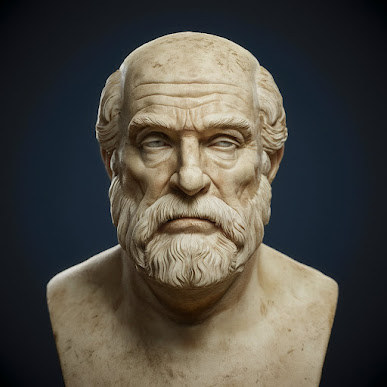
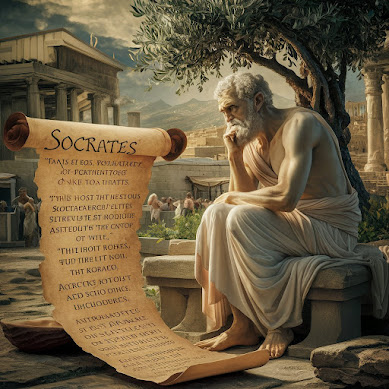
Socrates, the classical Greek philosopher, stands as a foundational figure in Western philosophy, renowned for his profound contributions to ethics and epistemology. Born circa 470 BCE in Athens, Socrates left no written records of his teachings; instead, his philosophy and methods were immortalized through the writings of his disciples, particularly Plato and Xenophon. Socrates is best known for his Socratic method—a form of cooperative argumentative dialogue that stimulates critical thinking and illuminates ideas by questioning and refuting assumptions. This method laid the groundwork for the dialectical approach in philosophy and education. Socrates' philosophical inquiries often centered on ethical concepts, such as justice, virtue, and the good life, emphasizing the importance of self-knowledge and the examined life. Despite his contributions, Socrates was a controversial figure in Athens, accused of corrupting the youth and impiety. His trial and subsequent execution in 399 BCE, documented in Plato's "Apology," highlight his unwavering commitment to his principles, even in the face of death. Socrates' legacy endures through his profound impact on his pupils, notably Plato, and the subsequent development of Western philosophical thought, making him an enduring symbol of intellectual integrity and moral inquiry.

While Socrates was alive, he was, as noted, the object of comic ridicule, but most of the plays that make reference to him are entirely lost or exist only in fragmentary form—Clouds being the chief exception. Although Socrates is the central figure of this play, it was not Aristophanes’ purpose to give a balanced and accurate portrait of him (comedy never aspires to this) but rather to use him to represent certain intellectual trends in contemporary Athens—the study of language and nature and, as Aristophanes implies, the immoralism and atheism that accompany these pursuits. The value of the play as a reliable source of knowledge about Socrates is thrown further into doubt by the fact that, in Plato’s Apology, Socrates himself rejects it as a fabrication. This aspect of the trial will be discussed more fully below.

Soon after Socrates’ death, several members of his circle preserved and praised his memory by writing works that represent him in his most characteristic activity—conversation. His interlocutors in these (typically adversarial) exchanges included people he happened to meet, devoted followers, prominent political figures, and leading thinkers of the day. Many of these “Socratic discourses,” as Aristotle calls them in his Poetics, are no longer extant; there are only brief remnants of the conversations written by Antisthenes, Aeschines, Phaedo, and Eucleides. But those composed by Plato and Xenophon survive in their entirety. What knowledge we have of Socrates must therefore depend primarily on one or the other (or both, when their portraits coincide) of these sources. (Plato and Xenophon also wrote separate accounts, each entitled Apology of Socrates, of Socrates’ trial.) Most scholars, however, do not believe that every Socratic discourse of Xenophon and Plato was intended as a historical report of what the real Socrates said, word-for-word, on some occasion. What can reasonably be claimed about at least some of these dialogues is that they convey the gist of the questions Socrates asked, the ways in which he typically responded to the answers he received, and the general philosophical orientation that emerged from these conversations.


The video delving into the life of Socrates opens with his poignant remark, "Crito, I owe the sacrifice of a rooster to Asklepios." This sets the stage for an exploration of how Socrates transitioned from a soldier to one of history's most celebrated philosophers. According to the Oracle of Delphi, Socrates was the wisest man alive, a declaration that spurred him to question others about their knowledge, ultimately leading to the formulation of the Socratic Method. His famous assertion, "The unexamined life is not worth living," encapsulates his dedication to intellectual and moral scrutiny. Socrates' defiance against the Thirty Tyrants illustrates his fearless commitment to truth, even at the risk of his own life. His acceptance of death, which he regarded as a release from the burdens of life, underscores his belief that only the ignorant fear death. An intriguing anecdote about a beauty contest demonstrates his distinctive approach to philosophy, challenging conventional notions and redefining the concept of beauty through critical inquiry. Cicero's observation that "Socrates was the first to call philosophy down from the heavens" further underscores Socrates' profound influence in making philosophy accessible and relevant to human concerns.


The video adopts an innovative narrative technique, with Socrates himself recounting his life story from his prison cell. He delves into his background and philosophical teachings, underscoring his principle of skepticism: one should not accept beliefs blindly but should persistently question and seek the truth. The video employs two metaphors: the tree and the stone. While a stone remains unchanging, a tree grows and flourishes, symbolizing the necessity of inquiry for intellectual and personal growth. Socrates challenges conventional understandings of virtue and love, asserting that merely repeating words without comprehending their essence is futile. The video traces the dissemination of Socratic knowledge through historical figures such as Plato, Aristotle, and Alexander the Great, illustrating its influence up to the Roman Empire. This intellectual heritage faced a hiatus during the Dark Ages but was revived during the Renaissance, as people once again embraced Socratic methods. A highlighted quote from Socrates, "The only true wisdom is in knowing you know nothing," encapsulates his enduring philosophy of perpetual questioning and humility in the pursuit of knowledge.


This video centers on Plato's "Apology," not in the sense of expressing regret, but as a defense of Socrates. It offers an in-depth examination of Socrates' final trial, showcasing the democratic legal system of Athens, where a jury rendered the verdict. Socrates famously disavowed any claim to wisdom, professing only that he knew nothing. His fearlessness in the face of death was evident, as he declared his intention to continue seeking truth beyond the grave. Unusually, Socrates viewed death in a positive light, believing it to hold great potential. He asserted, "A good man cannot be harmed either in life or in death, and his affairs are not neglected by the gods." In his last moments, Socrates remained composed and urged people to question and challenge those who perpetrate injustices against the innocent. This video thus highlights Socrates' unwavering commitment to truth and justice, even in the face of death.


A fourth video from Ted-Ed enhances the learning experience with engaging animated content, illustrating that Socrates did not engage in debates or dispense advice; instead, he continuously posed questions in response to the answers he received. One illustrative example features Socrates discussing justice with Euthydemus, where he elicits deeper understanding through persistent inquiry. Socrates likened himself to a midwife, facilitating the birth of ideas through his method of questioning. This Socratic method is now foundational in various fields such as medical science, astronomy, mathematics, law, and education, aiding in logical discourse and uncovering fundamental truths.

Integrating these insights, we recognize Socrates as far more than an unconventional philosopher; he was a soldier, a thinker, and a martyr for truth. His life and teachings persist in inspiring and challenging us to engage in continuous questioning, learning, and growth. Socrates' unwavering commitment to examining life, even in the face of death, emphasizes the paramount importance of seeking truth and understanding. His method of inquiry remains a formidable tool for learning and critical thinking, continually reminding us that true wisdom begins with acknowledging our own ignorance.

In Concluding part we can say that,...

The life and teachings of Socrates offer a legacy that extends far beyond the realm of philosophical inquiry. Through his relentless pursuit of truth and unwavering commitment to questioning established norms, Socrates emerged as a symbol of intellectual bravery in ancient Athens. His method, embodied in the Socratic dialogue, has left an indelible mark on disciplines ranging from philosophy to law and education. By choosing oral debates over written texts, Socrates ensured that his ideas remained dynamic, continuously evolving through communal discourse and challenging societal conventions of his time.

Socrates' trial and subsequent execution by hemlock highlight his steadfast dedication to integrity and moral courage. Refusing to flee, he accepted the jury's verdict, viewing his death as a testament to his principles. His renowned assertion, "The unexamined life is not worth living," encapsulates his philosophy and serves as an enduring call for humanity to critically engage with their beliefs and actions. In an era marked by political upheaval and societal transformation, Socrates' unwavering quest for truth stands as a timeless exemplar of intellectual integrity and moral fortitude.

Today, the influence of Socrates extends well beyond ancient Greece. His methodological approach to questioning assumptions and seeking deeper understanding resonates in contemporary academia and various other fields. The Socratic Method, with its focus on dialogue and inquiry, continues to shape modern approaches to learning and problem-solving. Socrates' life and teachings remind us that true wisdom is found not in certainty but in the persistent pursuit of knowledge and the courage to challenge our own convictions. Reflecting on his legacy, we are encouraged to critically examine our own lives, embracing the spirit of inquiry and intellectual humility that define Socrates' enduring contribution to Western thought and ethics.


THANK YOU FOR READING...
HAPPY LEARNING...EXPLORING...


Wednesday, 3 July 2024

How to Deconstruct a Text : Deconstructive Reading of Three Poems by Shakespeare, Ezra Pound and William Carlos Williams


Greetings!! Everyone. This blog is a part of  How to Deconstruct a Text in which three poems by Shakespeare, Ezra Pound, William Carols Williams will be deconstructed. Deconstruction, a theory formulated by Jacques Derrida, offers a method for analyzing texts by emphasizing the fluidity of meaning and the dynamic interaction between text and interpretation.


# Meaning of Deconstruction:-

Deconstruction doesn't actually mean "demolition;" instead it means "breaking down" or analyzing something (especially the words in a work of fiction or nonfiction) to discover its true significance, which is supposedly almost never exactly what the author intended.

Deconstruction, form of philosophical and literary analysis, derived mainly from work begun in the 1960s by the French philosopher Jacques Derrida, that questions the fundamental conceptual distinctions, or “oppositions,” in Western philosophy through a close examination of the language and logic of philosophical and literary texts. In the 1970s the term was applied to work by Derrida, Paul de Man, J. Hillis Miller, and Barbara Johnson, among other scholars. In the 1980s it designated more loosely a range of radical theoretical enterprises in diverse areas of the humanities and social sciences, including—in addition to philosophy and literature—law, psychoanalysis, architecture, anthropology, theology, feminism, gay and lesbian studies, political theory, historiography, and film theory. In polemical discussions about intellectual trends of the late 20th-century, deconstruction was sometimes used pejoratively to suggest nihilism and frivolous skepticism. In popular usage the term has come to mean a critical dismantling of tradition and traditional modes of thought.

FOR MORE INFORMATION ABOUT DECONSTRUCTION CLICK HERE


>> Let's Discuss the 3 poems,..

1. Sonnet 18 by William Shakespeare:-


# Analysis:-

William Shakespeare's Sonnet 18, often titled "Shall I compare thee to a summer's day?", is one of his most celebrated sonnets, known for its vivid imagery and exploration of the theme of eternal beauty. In this sonnet, Shakespeare initially poses a rhetorical question comparing the beloved to a summer's day, only to find that the beloved surpasses such a comparison. The speaker notes that a summer's day is often marred by imperfections—rough winds, short duration, and the inevitable decline of beauty. In contrast, the beloved's beauty is described as more temperate and eternal, unaffected by time's ravages. Shakespeare employs the metaphor of an "eternal summer" to emphasize the enduring nature of the beloved's beauty, preserved forever through the immortality granted by the poem itself. The sonnet concludes with a powerful couplet asserting that as long as humans live and can read, the poem will live on, ensuring that the beloved's beauty remains undying. Through this, Shakespeare not only celebrates the beloved's beauty but also the power of poetry to transcend time and mortality.

William Shakespeare's Sonnet 18,  "Shall I compare thee to a summer's day?", is renowned for its exploration of themes such as the timelessness of love and beauty, as well as the power of poetry to immortalize the beloved. The sonnet opens with a rhetorical question comparing the beloved to a summer's day, immediately highlighting the theme of beauty. Shakespeare employs several literary devices to enhance the sonnet's impact. Metaphor is used extensively, most notably in the comparison of the beloved to a summer's day, suggesting that the beloved's beauty surpasses even the most pleasant of seasons. Imagery is vivid throughout, with descriptions of "rough winds" and the "gold complexion" of the sun painting a picture of the transient nature of summer. Personification appears in the portrayal of the sun ("eye of heaven") and death ("shade"), adding depth to the abstract concepts. The sonnet's structure, with its three quatrains and a final couplet, allows Shakespeare to build his argument progressively, culminating in the couplet's powerful declaration that the beloved's beauty will live on eternally through the poem itself. This assertion highlights the theme of poetry's enduring nature, suggesting that while physical beauty may fade, the written word preserves it for future generations.

# Deconstruction of the 'Sonnet 18 by William Shakespeare':-

William Shakespeare's Sonnet 18, often celebrated for its lyrical beauty and idealization of the beloved, can also be viewed through the lens of deconstruction to uncover the inherent ambiguities and contradictions within the text. Deconstruction, a critical approach developed by Jacques Derrida, seeks to reveal the instability of meaning and the interplay of oppositions in a literary work.

In Sonnet 18, the speaker begins by comparing the beloved to a summer's day, only to immediately acknowledge the imperfections of summer, such as rough winds and fleeting duration. This juxtaposition calls into question the initial comparison, suggesting that the beloved's beauty might also be subject to the same flaws and transience. The metaphor of the summer’s day is thus both affirmed and undermined simultaneously.

Furthermore, the sonnet's conclusion, which asserts that the beloved’s beauty will be immortalized through the poem, introduces another layer of complexity. While the speaker claims that the written word can defy time and decay, this very claim is paradoxical. If the beloved's beauty is truly eternal, why is there a need for poetic preservation? This tension between the ephemeral nature of physical beauty and the supposed permanence granted by poetry reveals the limitations of both the beloved's physical form and the speaker’s poetic endeavor.

The personification of death and the sun also adds to the deconstructive reading. By attributing human qualities to abstract concepts, the sonnet blurs the line between the literal and the figurative, further complicating the notion of stability in meaning. The “eternal lines” mentioned in the final couplet are dependent on the survival and interpretation of the poem by future readers, introducing an element of uncertainty about the lasting impact of the sonnet.

Ultimately, deconstructing Sonnet 18 exposes the underlying contradictions and ambiguities in the text, challenging the straightforward interpretation of the beloved’s beauty and the power of poetry. It reveals how the sonnet simultaneously constructs and deconstructs its own assertions, leaving readers with a more nuanced understanding of Shakespeare’s exploration of beauty, time, and poetic immortality.


2. In a Station of the Metro by Ezra Pound:-


# Analysis:-

Ezra Pound's "In a Station of the Metro," a quite essential example of Imagist poetry, captures a fleeting moment with vivid clarity and minimalistic beauty. The poem consists of just two lines: 

"The apparition of these faces in the crowd;
Petals on a wet, black bough."

In these lines, Pound juxtaposes the transient, ghostly faces in a Parisian metro station with the delicate image of petals on a dark, rain-soaked branch. This comparison highlights the ethereal and ephemeral nature of human existence, emphasizing the fleeting beauty found in everyday moments. The "apparition" suggests a sense of sudden and ghostly appearance, while the "petals" evoke a sense of delicate beauty and transience. The "wet, black bough" provides a stark, contrasting backdrop, enhancing the visual intensity of the image. Pound's use of precise, evocative imagery and economy of language is a hallmark of the Imagist movement, which sought to capture moments of clarity and directness in poetic expression. This poem, with its brevity and vivid imagery, encapsulates the essence of modernist poetry, focusing on the immediate and the tangible while inviting deeper contemplation of the transient nature of human experiences.


# Deconstruction of the poem "In a Station of the Metro" by Ezra Pound:-


Deconstructing Ezra Pound's "In a Station of the Metro" reveals the poem's profound exploration of perception and the fleeting nature of beauty in modern life. Pound employs an imagist approach, distilling experience into a vivid snapshot with his precise and evocative language. The poem's brevity—a mere two lines—mirrors the transitory encounter it depicts, where faces in a bustling metro station are likened to "petals on a wet, black bough." This metaphor juxtaposes the natural with the industrial, emphasizing the ephemeral beauty amidst the mechanical backdrop of the metro. Deconstruction further uncovers the layered meanings within this comparison, suggesting a critique of urban alienation while simultaneously celebrating the poignant, momentary connections between individuals. The poem's structure, with its juxtaposition of disparate images, aligns with deconstructive principles, revealing the inherent instability of meaning and the multiplicity of interpretations embedded within the text. By scrutinizing the language and imagery, deconstruction unveils the tensions between presence and absence, coherence and fragmentation, ultimately enriching our understanding of Pound's work as a reflection on the transient, fragmented nature of modern existence.

Moreover, Initially, Ezra Pound's "In a Station of the Metro" may seem perplexing due to its minimal imagery. The poem’s imagery might not resonate immediately, especially for Indian readers unfamiliar with metro stations. However, the arrangement of words from "crowd" to "petals" creates a striking modernist visualization, paralleling techniques seen in T.S. Eliot's "The Waste Land" and W.H. Auden's "September 1, 1939." The poem juxtaposes urban and rural life, echoing Ferdinand de Saussure's ideas on the metaphysics of presence and absence, notably through the absence of noise. The ghostly "apparition" of faces in the crowd contrasts with the isolated petals on a black bough, highlighting the fleeting and fragmented nature of modern existence. This departure from traditional metaphors emphasizes the fragile beauty within the chaos of urban life.


3. The Red Wheelbarrow by William Carlos Williams:-


# Analysis:-


"The Red Wheelbarrow" by William Carlos Williams is a succinct, imagist poem that captures a moment of simple beauty and significance. Comprising only 16 words, the poem paints a vivid picture of a red wheelbarrow glazed with rainwater beside white chickens. This imagery is central to Williams' focus on the importance of everyday objects and scenes. The poem's structure, with its short lines and deliberate breaks, forces the reader to slow down and contemplate each word and image. The wheelbarrow, a symbol of manual labor and rural life, is depicted as an object upon which "so much depends." This phrase suggests the interdependence between humans and their tools, emphasizing the wheelbarrow's essential role in daily life. The colors red and white stand out, creating a visual contrast that enhances the simplicity and purity of the scene. Williams' use of clear, direct language and his focus on ordinary objects are key characteristics of the Imagist movement, which sought to strip poetry down to its most essential elements. Through this poem, Williams invites readers to appreciate the beauty and significance found in the mundane aspects of life, encouraging a deeper connection with the world around them.


# Deconstruction of the poem 'The Red Wheelbarrow' by William Carlos Williams:-


Deconstruction of William Carlos Williams's "The Red Wheelbarrow" involves examining the poem's structure, language, and underlying assumptions to uncover multiple layers of meaning and the interplay of signs and symbols. The poem's simplicity is deceptive, with its minimalist style and stark imagery, suggesting much more beneath the surface. 

At first glance, the poem's meaning seems straightforward, focusing on the image of a red wheelbarrow. However, deconstruction reveals the poem's complexity. The opening lines, "so much depends / upon," suggest a dependence that is left ambiguous. What exactly depends on the wheelbarrow is never explicitly stated, inviting readers to question and interpret this dependence.

The structure of the poem, with its precise, fragmented lines and lack of punctuation, breaks down conventional syntax and emphasizes each word and image independently. This fragmentation highlights the instability of language and meaning, a core tenet of deconstruction. Each element—red, wheelbarrow, rainwater, white chickens—functions as a signifier that can be interpreted in multiple ways, challenging any single, fixed interpretation.

Furthermore, the juxtaposition of natural and man-made elements (the wheelbarrow and chickens) with the natural elements (rainwater) blurs the boundaries between them, questioning the dichotomy between nature and human invention. The color imagery—red and white—creates a visual contrast that underscores the poem's attention to ordinary, yet essential, objects, suggesting their inherent value and interdependence.

In deconstructing "The Red Wheelbarrow," one uncovers the poem's commentary on perception and reality. It disrupts the expectation of a clear, singular meaning, instead presenting a tableau where each component is essential yet open to interpretation. Williams's work exemplifies how language constructs reality and how deconstructing that language reveals the multiplicity of meanings and the complexity of seemingly simple observations.

Deconstructive  reading  of  the poems  reveals the complexity and  multiplicity of  meanings within these seemingly simple Imagist poems. By emphasizing the instability of language and the active role of the reader,  deconstruction  opens  up  new  possibilities  for  interpretation,  enriching  our understanding of these works and challenging traditional approaches to literary analysis.

In conclusion, the analysis of these poems underscores the complexity of their meanings, the role of binary oppositions, and the concept of the free play of meaning. When one interpretation is prioritized, other possible readings are relegated to the periphery. This dynamic opens up new ways of engaging with and understanding the poems.


THANK YOU FOR READING...
HAPPY LEARNING...EXPLORING...


Sunday, 30 June 2024

Flipped Learning : Derrida & Deconstruction


Greetings!! Everyone. This blog is based on 'A Flipped Learning Task' assigned by Dr. Dilipsir Barad. In this blog questions are answered after watching videos. 


# Flipped Learning:-


> Information About Flipped Learning:-


Flipped learning is an educational approach where traditional instructional methods are inverted. In this model, the direct instruction is delivered outside of the classroom, often through videos or reading assignments, and classroom time is dedicated to engaging in interactive activities, discussions, and problem-solving exercises. This approach allows students to gain first exposure to new material on their own time and then use classroom time to deepen their understanding through collaborative and hands-on learning experiences. The goal of flipped learning is to create a more student-centered learning environment that encourages active participation and critical thinking.

>> Here are some key characteristics of flipped learning:-

1. Pre-Class Preparation:- Students are assigned learning materials to study before coming to class. This can include video lectures, readings, or other multimedia resources.
   
2. Active Learning:- Classroom time is used for activities that promote deeper understanding, such as group discussions, projects, problem-solving tasks, and other hands-on activities.
   
3. Teacher's Role:- In the flipped classroom, teachers act more as facilitators or coaches rather than traditional lecturers, guiding students through activities and providing individualized support.
   
4. Student Engagement:- Flipped learning aims to increase student engagement by making learning more interactive and collaborative.
   
5. Differentiated Instruction:- The approach allows for more personalized learning experiences, as teachers can address individual student needs and provide targeted support during class time.

Flipped learning is designed to enhance the learning process by making it more dynamic and responsive to the needs of students.


VIDEO:1 > Defining Deconstruction


1. Why is it difficult to define Deconstruction?

> There is a difficulty of definition. Because there have been problems defining deconstruction. Derrida claimed that all of his essays were attempts to define what deconstruction is, and that deconstruction is necessarily complicated and difficult to explain since it actively criticizes the very language needed to explain it.

2. Is Deconstruction a negative term?

No, it is not a negative term. This goal separates Destruction from deconstruction, not because deconstruction is purely negative, but because it has no fixed endpoint or goal. Deconstruction is always an on-going process because the constantly shifting nature of language means that no final meaning or interpretation of a text is possible.

3. How does Deconstruction happen on its own?

Deconstruction is a process that involves questioning one's beliefs and the beliefs of others. It can happen in layers and spirals, and it can be a potentially infinite process. Some say that deconstruction is a double movement of simultaneous affirmation and undoing, and that it has no correct destination or right way to do it.


VIDEO:2 > Heidegger & Derrida


1. The influence of Heidegger on Derrida:-

Heidegger was famous German Philosopher with his well known work "Being and Time" 1927 which destroyed the entire western tradition of philosophy. In this work he criticize 'The Idea of Being of Beings.' This influenced Derrida.

2. Derridean rethinking of the foundations of Western philosophy:-

As discuss in the video Derrida was influenced by Heidegger's idea of Phonocentricism and logocentricism he added that the importance of phonocentricism means speech on logocentricism means writing in history of criticism. 


VIDEO:3 > Ferdinand De Saussure & Derrida


1. Ferdinand de Saussureian concept of language (that meaning is arbitrary, relational, constitutive)

The idea was given by Saussure is the idea of Sign. According to him language is sign and it is signifier and signified with that we understand the meaning. He also told about the arbitrary relation between signifier and signified.

Moreover, according to Saussure, language is constitutive. This means that language constitutes the word we experience; it does not refer to the world in itself. This concept is perhaps the most radical, and the hardest to comprehend, of anything Saussure proposed.

2. How Derrida deconstructs the idea of arbitrariness?

> Derrida deconstructs the idea of arbitrariness by showing that while signs are arbitrary in their relationship to what they signify, their meanings are contingent and interconnected through a web of different relations, challenging the stability of any fixed or absolute meaning.

3. Concept of metaphysics of presence:-

In Deconstruction philosophy Derrida characterizes as the “metaphysics of presence.” This is the tendency to conceive fundamental philosophical concepts such as truth, reality, and being in terms of ideas such as presence, essence, identity, and origin—and in the process to ignore the crucial role of absence and difference.


VIDEO:4 > DifferAnce


1. Derridean concept of DifferAnce:-

Derrida's concept of "différance" combines the ideas of difference and deferral, highlighting how meaning is both differentiated and deferred through language, challenging traditional notions of fixed and immediate meaning and both 'Difference and DifferAnce' have different in writing but not in pronouncing.


2. Infinite play of meaning:-

The infinite play of meaning refers to the continuous and endless process of signification where meanings are fluid, interconnected, and constantly shifting, without a fixed or final interpretation.

3. DIfferAnce = to differ + to defer:-


Derrida combined two words "Différance" combines "to differ" (difference) and "to defer" (deferral) both have similar meaning that is "DifferAnce".


VIDEO:5 > Structure, Sign & Play


1. Structure, Sign and Play in the Discourse of the Human Sciences:-

Derrida presented a paper at Yale University in which he does critique of his work Structuralist Anthropology. This works provide numbers of arguments such as role of speech, writing, and language etc.

2. Explain: "Language bears within itself the necessity of its own critique."

"Language bears within itself the necessity of its own critique" is a statement by Jacques Derrida in his work Structure, Sign and Play. It's a central idea to deconstructive criticism, which aims to reveal the contradictions and inconsistencies within texts and ideas.


VIDEO:6 > Yale School


1. The Yale School: the hub of the practitioners of Deconstruction in the literary theories:-

Yale school, group of literary critics at Yale University, who became known in the 1970s and '80s for their deconstructionist theories. The Yale school's skeptical, relativistic brand of criticism drew inspiration from the work of French philosopher Jacques Derrida.

2. The characteristics of the Yale School of Deconstruction:-

The Yale form of deconstruction tends to be a highly playful and erudite form of close reading, with very little interest in making either a philosophical or political point, whereas Derrida is precisely concerned with the latter.

Moreover, 
  •  Critiquing binary oppositions 
  •  Questioning aesthetic and formalist approaches 
  • Examining rhetoric and language intricacies


VIDEO:7 > Other Schools and Deconstruction


1. How other schools like New Historicism, Cultural Materialism, Feminism, Marxism and Postcolonial theorists used Deconstruction?

Other schools like Historicism, Cultural Materialism, Feminism, Marxism and Postcolonial theorists have employed deconstruction:

1. New Historicism: Reveals instability in historical narratives and hidden power/ideology contradictions.
2. Cultural Materialism: Exposes economic and power dynamics in cultural production.
3. Feminism: Challenges patriarchal structures and gender binaries.
4. Marxism: Uncovers capitalist ideologies and their contradictions.
5. Postcolonial Theory: Critiques colonial narratives, highlighting complexities in postcolonial identities.


THANK YOU FOR READING...
HAPPY LEARNING...EXPLORING..


Thursday, 25 April 2024

Assignment: 110 History of English Literature: From 1900 to 2000

 ASSIGNMENT:110


National Identity and Patriotism in Rupert Brooke’s Poem ‘The Soldier’


# Personal Information:-


Name:- Hardi Vhora

Batch:- M.A. Sem.:2 (2023-2025)

Enrollment No.:- 5108230032

Paper No.:- 110

Paper Name:- History of English Literature – From      1900 to 2000 

Paper Code:- 22403

Roll No.:- 08

e-mail:- hardivhora751@gmail.com


# Table of Content:-


  • Personal Information

  • Table of Content

  • Abstract

  • Keywords

  • Introduction of Rupert Brooke

  • Introduction of the poem ‘The Soldier’

  • Brooke’s Portrayal of England

  • Patriotism and Sacrifice

  • The Soldier’s Duty

  • Critical Aspects and Interpretation

  • Impact of The poem and Brooke’s Personal Connection

  • Conclusion


1.Abstract:-

Rupert Brooke’s poem ‘The Soldier’ stands as a quintessential representation of early 20th-century British patriotism and national identity amidst the tumult of World War I. This paper delves into the nuanced exploration of these themes within the poem, examining how Brooke portrays the idealised image of the soldier as a symbol of unwavering devotion to country and king. Through an analysis of poetic devices such as imagery, tone, and structure, this study seeks to unravel the complex interplay between individual sacrifice and collective identity. Furthermore, it investigates the historical context surrounding the poem’s composition, shedding light on the socio-political milieu that shaped Brooke’s perception of patriotism. By contextualising ‘The Soldier’ within broader discourses of nationalism and war literature, this paper aims to offer insights into the enduring significance of Brooke’s portrayal of national identity and patriotism in shaping cultural consciousness during a period of profound upheaval.


2.Keywords:-


  1.  Rupert Brooke

  2.  The Soldier

  3.  Patriotism

  4.  National identity

  5.  World War I

  6.  British literature


3. Introduction of Rupert Brooke:-


Few writers have provoked as much excessive praise and scornful condemnation as English poet Rupert Brooke. Handsome, charming, and talented, Brooke was a national hero even before his death in 1915 at the age of 27. His poetry, with its unabashed patriotism and graceful lyricism, was revered in a country that was yet to feel the devastating effects of two world wars. Brooke's early death only solidified his image as "a golden-haired, blue-eyed English Adonis," as Doris L. Eder notes in the Dictionary of Literary Biography, and among those who lauded him after his death were writers Virginia Woolf and Henry James and British statesman Winston Churchill. In the decades after World War I, however, critics reacted against the Brooke legend by calling his verse foolishly naive and sentimental. Despite such extreme opinions, most contemporary observers agree that Brooke—though only a minor poet—occupies a secure place in English literature as a representative of the mood and character of England before World War I.


Brooke's early years were typical of virtually every English boy who was a member of a well-to-do family. He attended a prestigious boarding school—Rugby, where his father was a headmaster—studied Latin and Greek, and began to write poetry. It was taken for granted that Brooke would go on to one of the great English universities, and accordingly he entered Cambridge in 1906.


During his three years at Cambridge, Brooke became a visible figure in English intellectual circles, counting among his acquaintances Virginia Woolf, writer Lytton Strachey, economist John Maynard Keynes and his brother Geoffrey (later to become Brooke's bibliographer), and poet William Butler Yeats. Brooke also continued to write poetry, although his poems from this period are, as Eder comments, "highly derivative, facile literary exercises." In The Neo-Pagans: Rupert Brooke and the Ordeal of Youth, Paul Delany gives an example of Brooke's verse from his Cambridge years. Written in 1909, "The Voice," like most of his early poetry, dwells on the themes of love and nature: "Safe in the magic of my woods / I lay, and watched the dying light / ... The three that I loved, together grew / One, in the hour of knowing, / Night, and the woods, and you." Although his early work is thought to be of little significance, Brooke by this time was considered a serious though unaccomplished poet. In addition, he was an increasingly conspicuous figure in literary circles—a fame fueled without doubt by his charm and good looks.


Between his graduation from Cambridge in 1909 and the start of World War I in 1914, Brooke spent most of his time writing and travelling. His poetry during this period, which still emphasised the themes of love and nature, resembled that of most of the poets of his generation, including D.H. Lawrence, John Drinkwater, and Walter de la Mare. These poets came to be known as Georgian poets (named after England's king at the time); their verse reflects an idealistic preoccupation with rural, youthful motifs. In fact, Brooke and many of his friends enjoyed spending time in the countryside, bathing nude in local streams and sleeping on the ground; such activities earned them the nickname "neo-pagans." Eder points out that "Georgian verse now seems faded and pseudo-pastoral, a poetry of suburbia written by city dwellers celebrating cosy weekends in flower-wreathed country cottages." At the time, though, such poetry was fashionable and respected, and the first collection of poems by these writers, Georgian Poetry, 1911-1912, was extremely successful.


The "Nineteen Fourteen" sonnets were immediately famous. On Easter Sunday in 1915, the dean of St. Paul's Cathedral in London, William Ralph Inge, read aloud "The Soldier." Brooke's death three weeks later insured that his name would always be intertwined with the war sonnets, and with "The Soldier" in particular. As A.C. Ward comments, "The Soldier" "became the one poem inseparably linked with Rupert Brooke's name. It is, for all time, his epitaph—beautiful and tranquil." The events surrounding Brooke's death were a significant factor in the success of "Nineteen Fourteen." In February of 1915, Brooke had been ordered to sail to the Dardanelles—a strait between Europe and Turkey—for the Gallipoli campaign that would begin that spring. During the journey, however, Brooke contracted blood poisoning from an insect bite; he died on April 23 on a ship in the Aegean Sea and was buried in an olive grove on the Greek island of Skyros. Such a death and burial, notes Delany, fueled the myth that the handsome poet had provoked the wrath of angry, jealous gods. "Rupert's death was first reported as caused by sunstroke," writes Delany, "and had not Phoebus Apollo, the golden-haired god of poetry, struck down Marsyas for boasting that he could sing as well as the god?" Furthermore, Brooke died in a part of the world long associated with another famous English poet, Lord Byron. As Delany says, "Now another Cambridge poet, who had loved to swim in Byron's Pool, had shared Byron's fate."


4. Introduction of the poem ‘The soldier’:-


If I should die, think only this of me:

      That there’s some corner of a foreign field

That is forever England. There shall be

      In that rich earth a richer dust concealed;

A dust whom England bore, shaped, made aware,

      Gave, once, her flowers to love, her ways to roam;

A body of England’s, breathing English air,

      Washed by the rivers, blest by the suns of home.


And think, this heart, all evil shed away,

      A pulse in the eternal mind, no less

            Gives somewhere back the thoughts by England given;

Her sights and sounds; dreams happy as her day;

      And laughter, learnt of friends; and gentleness,

            In hearts at peace, under an English heaven.


>> This poem has had two titles: “The Soldier” and “Nineteen-Fourteen: The Soldier”


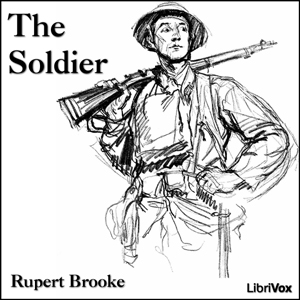
 "The Soldier" is one of the most renowned poems composed by Rupert Brooke, a prominent English poet. It was written during the early stages of World War I and was published in 1915. The poem is often considered a quintessential expression of patriotic sentiment and idealism associated with the early phase of the war.


In "The Soldier," Brooke reflects on the concept of sacrifice for one's country and portrays a romanticised vision of England as a beloved homeland. The poem exudes a sense of nostalgia, portraying the speaker's longing for his homeland even in the face of death. It celebrates the idea of selfless service and portrays the soldier's willingness to give his life for the preservation of England's honour and glory.


Brooke's use of lyrical language and traditional poetic forms adds to the poem's timeless appeal, making it a poignant exploration of themes such as duty, nationalism, and the human experience of war. "The Soldier" continues to resonate with readers for its evocative portrayal of patriotism and sacrifice, capturing the spirit of a generation caught up in the turmoil of war.


5. Brooke’s Portrayal of England:-


Rupert Brooke's poem "The Soldier" presents a romanticised and idealised portrayal of England, glorifying the country and its natural beauty. The poem was written during World War I and reflects the patriotic sentiment prevalent at the time.


In the poem, Brooke envisions the death of an English soldier on a foreign battlefield. However, rather than depicting the horrors of war, the poem suggests that the soldier's sacrifice will forever bind his soul to the idyllic countryside of England. The lines "And think, this heart, all evil shed away, / A pulse in the eternal mind, no less / Gives somewhere back the thoughts by England given" convey the idea that the soldier's spirit will become one with the very essence of England, forever contributing to the country's collective consciousness.


The poem portrays England as a pastoral paradise, with references to "her flowers to love," "her sights and sounds," and "her acres." Brooke presents England as a nurturing and beloved homeland, worthy of the ultimate sacrifice of its soldiers. The imagery used, such as "the rivers, the suns of home," and "the English air," evokes a sense of nostalgia and attachment to the English landscape.


Furthermore, the closing lines, "In that rich earth a richer dust concealed," suggest that even in death, the soldier's body will become part of the fertile soil of England, contributing to the country's bounty and abundance.


Overall, Rupert Brooke's "The Soldier" presents a highly romanticised and idealised portrayal of England, depicting it as a pastoral haven and a cherished homeland worth fighting and dying for. The poem reflects the patriotic sentiment of the time and aims to glorify the sacrifice of English soldiers during World War I.


6. Patriotism and Sacrifice:-


Though Rupert Brooke’s “The Soldier” has often been interpreted, categorised or dismissed as a poem on idealised patriotism, its underlying nationalistic and colonialist/imperialist dimensions have not been duly treated alongside its patriotic dimension. Since the 1980s, there has been a resurgence of interest in such interrelated themes as patriotism, nationalism, and postcolonialism due to the engagement of some political, philosophical, and literary theorists with a wide range of conceptual and moral debates

Rupert Brooke's poem "The Soldier" is a powerful expression of patriotism and the idea of sacrificing one's life for one's country.

 “The Soldier” is a multifaceted poem which has a variety of different features which can be interpreted on various levels,

namely patriotism, nationalism, and colonialism/imperialism. The poem reflects the sentiment of the time, during World War I, when a wave of patriotic fervour swept across Britain, and young men were encouraged to enlist and fight for their nation.


The poem's central theme revolves around the idea of a soldier's sacrifice on a foreign battlefield, and how his death binds his soul to the eternal beauty and essence of England. The opening lines, "If I should die, think only this of me: / That there's some corner of a foreign field / That is forever England," establish the soldier's willingness to sacrifice his life for his country, and the notion that even in death, a part of him will forever belong to England.


The lines "A pulse in the eternal mind, no less / Gives somewhere back the thoughts by England given" suggest that the soldier's sacrifice will contribute to the collective consciousness and cultural heritage of England, emphasising the idea that his death serves a higher purpose and contributes to the glory and continuity of his nation.


The patriotic sentiment is further reinforced through the romanticised portrayal of England's natural beauty, with references to "her sights and sounds," "her flowers to love," and "her acres." The soldier's sacrifice is presented as a means of preserving and protecting these cherished aspects of the English landscape and way of life.


The closing lines, "In that rich earth a richer dust concealed," reinforce the idea of the soldier's body becoming one with the 

fertile soil of England, symbolising the ultimate act of sacrifice and the eternal bond between the soldier and his homeland.


Through this poem, Brooke effectively captures the spirit of patriotism and the willingness to make the ultimate sacrifice for one's country. The soldier's death is not portrayed as a tragedy but rather as a noble act that contributes to the enduring legacy and essence of England itself.


Moreover,


Written during the first year of World War I, “The Soldier” represents many of the patriotic ideals that characterised pre war England. The patriot in the poem is loyal to his country. In fact, the poem evoked deep, heartfelt sentiments of patriotism to which Churchill felt all English soldiers should aspire, extolling Brooke for being “all that one would wish England’s noblest sons to be in days when no sacrifice but the most precious is acceptable” (qtd. in Bloom, 2003: 37). Though Brooke is prophesying the tragedy of his own possible death, his feeling of something higher than himself, a national cause, overwhelms any feelings of doubt or apprehension he might have. As a form of loyalty, patriotism requires a genuine willingness to sacrifice for the country. As Garner (2019: 83) remarks: “The perfect patriot goes knowingly to his death, that is to say, he accepts a degree of risk that amounts to certainty”. This is exactly what the poet/speaker in this sonnet is ready to do. Right from the beginning, the octave reveals the patriot’s unquestioning devotion to and pride in his country. Brooke also portrays England as the noblest and the best country for which to die. As an essential component of the patriotic nature of this poem, the speaker depicts his country as a kind of a protective and nurturing mother that gives him his existence as well as his identity. The soldier's strong bond with England makes him feel that it is both the origin of his existence and the heaven to which his soul will return after his death: A dust whom England bore, shaped, made aware, Gave, once, her flowers to love, her ways to roam, A body of England's, breathing English air, Washed by the rivers, blest by suns of home. (Brooke, 2006:5-8) As a patriotic poem, “The Soldier” is primarily intended to give support to England during a critical time of hostilities with other opposing countries during The Great War of 1914-1918. It shows the patriot’s readiness to sacrifice his life for the sake of his country, placing its welfare above his own personal life. Indeed, such sacrifice for the fatherland constitutes the idealised model of patriotism. Although the title refers to one soldier, the text as a whole suggests that it is meant to represent all British soldiers. The poem as a whole demonstrates that the identity of the speaker is closely connected to that of his country and that the “England” of the poem is a homeland for all British soldiers and the soldier is a true representative of every Englishman. The speaker in the sonnet ultimately loses his individual identity and identifies himself with his homeland. Speaking in the first-person pronoun, the soldier expresses a self-sacrificial, martyr-like attitude toward his death. For him, it is an honour to die for his country, and no consideration should be given to personal interests. Such an attitude poses an obvious case of altruism or self-abnegation which can be considered a good example of “robust” patriotism. From MacIntyre’s perspective, patriotism involves a special kind of loyalty towards one's own nation due to its particular features, merits and achievements. Such a view is embodied in Brooke’s poem where the speaker shows fidelity to his country expressed through maternal or parental terms. MacIntyre (1984: 8) further argues that patriotism cannot be justified as a virtue on the grounds of the liberal concept of morality that has dominated Western thought over the last centuries. He emphatically rejects the liberal concept of morality in its general perspective of envisioning a universal and free moral impartiality and instead appeals to Aristotle’s view of morality in its “particular" allegiance to a specific community in which one is raised and learns one’s morals. As well known, Aristotle’s conception of friendship, particularly virtue friendship, is based on mutual concern of each person for the other for his own sake rather than external factors.


Further instances of this type of patriotism can be seen in the poem’s introduction of various abstract concepts such as love, motherhood, sacrifice, selflessness, loyalty, glory, and eternity, which are often exaggerated to create a feeling that a soldier’s death in the war would reduce the negative impact of war and death. Throughout the poem, Brooke tries to bring consolation and comfort for those who are far away, waiting in patience, from the front lines, waiting in patience. He also personifies and glorifies England, using the word “England” or “English” six times in total, apparently to create an impression of the great and invaluable things that England has done for the soldier, and to establish a great sense of patriotic intensity and a tremendous significance for the patriot’s death.


Asking the reader to speculate on life after death, the soldier is thinking about the soul rather than the body, leading the reader to speculate on the soldier’s soul after his death, when “all evil” or sin has been washed away and the soul has become part of God:


 “And think, this heart, all evil shed away, A pulse in the eternal mind, no less Gives somewhere back the thoughts by England given; Her sights and sounds; dreams happy as her day; And laughter, learnt of friends; and gentleness, In hearts at peace, under an English heaven. (Brooke 2006: 9-14)”


In the above excerpt, Brooke maintains that the patriot or martyr can transcend death by returning to life after his sacrificial death. Bloom (2003:36), in this connection, rightly maintains: “By identifying his own body and the soil of England in an almost mystical fashion, Brooke ensures that both he and England will transcend death and national boundaries by achieving immortality in the hearts and minds of English people everywhere”. Combined together, these images provide a kind of psychological satisfaction to the young recruits for risking their lives at the battle front.


7. The Soldier’s Duty:-


In Rupert Brooke's poem "The Soldier," the central idea of a soldier's duty is portrayed through the lens of patriotism, sacrifice, and the eternal connection between the soldier and his beloved homeland, England.


The poem suggests that the soldier's primary duty is to defend and protect the essence of England itself, even at the cost of his 

own life. This is evident in the opening lines: "If I should die, think only of me: / That there's some corner of a foreign field / That is forever England." These lines convey the soldier's willingness to sacrifice himself on a foreign battlefield, with the understanding that his death will forever consecrate a part of that land as a symbolic extension of England.


The soldier's duty is portrayed as a noble and selfless act, transcending mere physical existence. The lines "A pulse in the eternal mind, no less / Gives somewhere back the thoughts by England given" suggest that the soldier's sacrifice will contribute to the collective consciousness and cultural heritage of England, implying that his duty is to uphold and preserve the very essence of his nation.


The romanticised portrayal of England's natural beauty, with references to "her flowers to love," "her sights and sounds," and "her acres," further emphasises the soldier's duty to protect and defend the idyllic landscape and way of life that England represents.


The closing lines, "In that rich earth a richer dust concealed," reinforce the idea that the soldier's ultimate duty is to become one with the fertile soil of England, symbolising the ultimate act of sacrifice and the eternal bond between the soldier and his homeland.


Throughout the poem, Brooke depicts the soldier's duty as a sacred obligation to serve and defend the idealised concept of England, not just its physical borders but its cultural and 

spiritual essence. The soldier's sacrifice is portrayed as a means of ensuring the continuity and preservation of England's identity, values, and way of life for future generations.


8. Critical Aspects and Interpretations:-


Brooke’s poetry has often been studied as whole rather than individual poems. His five sonnets collection (1914) seems to have drawn more critical attention than the rest of his poems. Following Brooke’s early death, a good number of reviews, biographical and critical studies appeared. Most notable among the biographies is the extensive biography by Hassall (1964), which provides a full account of Brooke’s life. Equally impressive is the collection of Brooke’s correspondence edited by Stringer (1948, repr. 1972) which illustrates the diversity in Brooke’s interests. One of the critical studies of Brooke’s works is Kahn’s thesis (1972) which focuses on a critical evaluation of Brooke’s poetry, trying to make some connection between the life, the personality, and the works of the poet. Khan also outlines the various influences on Brooke and provides a well-argued critical appraisal of Brooke’s works. Silkin (1972) asserts that Brooke’s sonnets, particularly “The Soldier”, are war poems in the sense that they perpetuate imperialist attitudes. Silkin treats this poem as well as Brooke’s other poems as historical documents that reveal many things about the circumstances of World War I. Besides reading the poem Within its historical context, Silkin examines it within its inherent moral values, trying to determine the poet’s attitude towards war and the effect it had on the poem. Bloom (2003) provides biographical, critical, and bibliographical information on Brooke’s best-known poems, discussing Brooke’s major life events and important literary accomplishments, particularly the famous 1914 sequence of five sonnets. Bloom’s book contains thematic and structural analysis of each poem together with a selection of critical excerpts derived from previously published material by leading critics. Schoenle (1997) attempts a critical survey of Brook’s works and his development as a poet, including early reviews and a history of Brooke's publications. The study also provides useful biographical information and attempts a reappraisal of Brooke. More recent studies concentrate on finding new perspectives to deal with Brooke’s war poetry. In their essay, Kousar and Qasim (2015), for instance, examine expressionist elements in Brooke’s war poems. The authors argue that Brooke employs different literary techniques like abstraction and interior monologue and maintain that Brooke seems to be more interested in subjective responses than in focusing on objective reality. Thus, the greatest part of the critical literature on Brooke’s poem has focused on the view that this is a highly patriotic poem and an idealised and naïve reaction to war. This paper attempts to reinvestigate the theme of patriotism in the poem from a new perspective.


The historical record indicates that Brooke saw his only action of World War I during the defence of Antwerp, Belgium, against German invasion in early October (1914), where British troops 

were forced to retreat. Brooke subsequently returned to Britain awaiting redeployment. During this period (November and December 1914) he wrote his best-known poems, the group of five-war-sonnets entitled 1914 which included “The Soldier”. Following Brooke’s early death, which was caused by blood poisoning, The Times published in 1915 an obituary notice for Brooke written by Winston Churchill, who said: “The thoughts to which he [Brooke] gave expression in the very few incomparable war sonnets which he has left behind will  be shared by many thousands of young men moving resolutely and blithely forward into this, the hardest, the cruellest, and the least-rewarded of all the wars that men have fought” (qtd. in Bloom, 2003:38). Churchill’s words, combined with Dean of St. Paul’s (1915) remark that “the enthusiasm of a pure and elevated patriotism had never found a nobler expression” (qtd. in Schoenle, 1997: 27) have since then set the scene for future writings on Brooke’s “The Soldier” as a patriotic poem and launched Brooke’s status as a national hero and martyr. Of Brooke’s war poems, the best and the most famous is “The Soldier”, mostly because of its high-spirited patriotism. Written at an early period of World War I, the poem reflected the hopes and beliefs of a country that had not as yet witnessed the devastating effects of the war. As Bloom (2003: 12) observes: “Brooke became a national hero even before his early death at the age of 27, and many during this early stage of the war believed him to represent the ideal of patriotic and noble sacrifice”. Though the poem first attracted public and critical attention because of the speaker’s self-sacrifice, it gradually lost its glamour after many critics dismissed it as mere smugness as the Great War dragged on, causing the loss of a great number of lives and 

a lot of damage and destruction. Viewed as naïve, romantic, and idealised, the fervour of Brooke’s initially acclaimed patriotic poem was soon eclipsed by the more realistic poetry that emerged out of the trench warfare written by such poets as Wilfred Owen and Siegfried Sassoon, who depicted a more realistic picture of the war. As Bloom (2003: 36) succinctly asserts: “More recent critics have complained that ‘The Soldier’ is riddled with sentimentality and narcissistic fantasy”. Despite this, Brooke’s poem continued to attract critical attention as a reflection of the English pre-war mood and the English patriotic tradition. Indeed, the whole sonnets series has continued to be criticised for its shallow, unrealistic, and sentimental patriotic expressions and for its making a dividing line between the illusionary world created by Brooke and the genuine horrors of warfare. In my opinion, the greatly popularised critical representation of Brooke’s “The Soldier” as a naive, romanticised, and idealised picture of war does not reflect a true understanding and interpretation of the poem. In a letter he 

wrote to his American friend, the poet Leonard Bacon, Brooke gave a complete and realistic account of his reaction to the war and of the horrors he observed following his actual participation in the British Expeditionary Force which attempted to check the German invasion of Antwerp at the start of the war. Because it illustrates Brooke’s realistic picture of war, the letter is worth quoting at some length: I marched through Antwerp, deserted, shelled, and burning one night, and saw ruined houses, dead men and horses: and railway trains with their lines taken up and twisted and flung down as if a child had been-playing with a toy. And the whole heaven and earth was lit up by the glare from the great lakes and rivers of burning petrol, 

hills and spires of flame. That was like Hell, Dantesque Hell, terrible. But there -- and later-- I saw what a true hell was...It's a great life, fighting, while it lasts. The eye grows clearer and the heart. But it's a bloody thing, half the youth of Europe blown through pain to nothingness in the incessant mechanical slaughter of these modern battles. (qtd. in Kahn, 1972:94-95) Brooke’s realistic description of his war experience demonstrates that “The Soldier”, which was composed during the two months following the Antwerp expedition as aforementioned, was based on a true war experience even though it does not try to give a realistic picture of the horrors of the war. Brooke was not simply a youthful idealist ignorant about what war really meant; he knew that war was not merely about patriotism and romantic idealism but involved fighting for English homeland and England’s long-established traditions of what wars are fought for. 


9. Impact of The Poem and Brooke’s Personal Connection:-


Rupert Brooke's poem "The Soldier" had a significant impact during World War I and beyond, resonating with the patriotic sentiments of the time and reflecting the poet's own personal connection to England and the war effort.


# Impact of the Poem:-


1. Rallying Patriotism: The poem's idealised portrayal of England and its glorification of the soldier's sacrifice struck a chord with the British public during the early stages of World War I. It helped to rally patriotic fervour and encouraged enlistment, as young men were inspired by the notion of defending their beloved homeland.


2. Enduring Legacy: Despite the horrors of the war that followed, "The Soldier" remained a powerful and enduring piece of war poetry. Its romanticised vision of England and the soldier's sacrifice continued to resonate with subsequent generations, becoming a poignant symbol of the sacrifices made by the British during the war.


3. Shaping Public Perception: The poem's idealised portrayal of England shaped the public perception of the war effort. It presented the soldier's death not as a tragedy but as a noble act that would forever bind his soul to the essence of England, 

contributing to the nation's collective consciousness and cultural heritage.


# Brooke's Personal Connection:-


1. Love for England: Brooke had a deep and profound love for England, particularly its natural beauty and rural landscapes. This personal connection is evident in the poem's vivid descriptions of "her flowers to love," "her sights and sounds," and "her acres," reflecting the poet's own appreciation for the English countryside.


2. Patriotic Duty: As a member of the British intellectual elite, Brooke felt a strong sense of patriotic duty when World War I began. He enlisted in the Royal Naval Reserve and was commissioned into the Royal Naval Volunteer Reserve as a temporary Sub-Lieutenant shortly after the outbreak of the war.


3. Personal Sacrifice: Brooke's personal experience as a soldier imbued the poem with a sense of authenticity and personal connection. He was stationed in France and later transferred to the Mediterranean, where he contracted blood poisoning from an insect bite. Although he initially recovered, he died of sepsis on April 23, 1915, making the ultimate sacrifice for his country.


Brooke's personal love for England and his sense of patriotic duty, combined with his own experiences as a soldier, contributed to the powerful and enduring impact of "The Soldier." The poem not only resonated with the public during World War I but also became a lasting symbol of the sacrifices made by British soldiers and the enduring connection between the soldier and their beloved homeland.


10. Conclusion:-


Rupert Brooke's poem "The Soldier" stands as a powerful testament to the enduring themes of national identity, patriotism, and the profound sacrifices made by soldiers during times of war. Through its poetic imagery and evocative language, the poem captures the essence of England's natural beauty and the deep-rooted love for one's homeland.


Brooke's portrayal of England as a pastoral paradise, with references to "her flowers to love," "her sights and sounds," and "her acres," resonates with a sense of nostalgia and attachment to the English landscape. This idealised depiction serves as a reminder of the country's cultural heritage and the values that soldiers fought to protect.


The poem's central theme of patriotism and sacrifice is embodied in the soldier's willingness to lay down his life for his country. Brooke's use of phrases such as "a pulse in the eternal mind" and "the thoughts by England given" elevates the soldier's sacrifice to a higher plane, where his death becomes a contribution to the collective consciousness and cultural legacy of England itself.


Furthermore, the poem explores the concept of a soldier's duty, which transcends mere physical existence. The soldier's ultimate duty is portrayed as a sacred obligation to defend and preserve the very essence of England, its idyllic landscapes, and it's way of life. The closing lines, "In that rich earth a richer dust concealed," symbolise the ultimate act of sacrifice, where the soldier becomes one with the fertile soil of his beloved homeland.


Despite its romanticised portrayal of war and England, "The Soldier" remains a powerful and enduring piece of poetry, resonating with subsequent generations and shaping public perception of the sacrifices made during World War I. Brooke's personal connection to England and his experiences as a soldier lent the poem a sense of authenticity and personal significance, contributing to its lasting impact.


 Rupert Brooke's "The Soldier" stands as a poignant exploration of national identity, patriotism, and the profound sacrifices made by soldiers in defence of their homeland. Its enduring legacy serves as a reminder of the unbreakable bond between a soldier and the country they swore to protect, even in the face of the ultimate sacrifice.


# References:-


Brooke, Rupert. “The Soldier by Rupert Brooke | Poetry Magazine.” Poetry Foundation, https://www.poetryfoundation.org/poetrymagazine/poems/13076/the-soldier. Accessed 26 April 2024.

Jordan, Nisreen T. Rupert Brook's "The Soldier" Revisited: A New Perspective, vol. 22, 01-01-2022, https://ijaes2011.net/volume22/issue1/7.pdf.

“Rupert Brooke.” Poetry Foundation, https://www.poetryfoundation.org/poets/rupert-brooke. Accessed 26 April 2024.


Thank You For Reading...

Happy Learning...Exploring


Paper:209 Academic Integrity in Research Methodology: The Role of Anti-Plagiarism Ethics in Fostering Originality and Trust in Scholarship

  Greetings!! Everyone this blog is based on an assignment of 'Research Methodology.' ASSIGNMENT: 209 Academic Integrity in Research...